












We won't spill the beans by revealing that AI is everywhere and no longer a promise of the future. We actually don't have to, because the ecommerce world didn't expect consumers to adopt AI faster than many brands expected. Around 73% now use AI during their shopping journey.
However, being aware of something and knowing how to benefit from it differ. Artificial intelligence in ecommerce is a vast topic, and finding the right option for your business can be hectic. Below, we've listed the most essential AI trends in ecommerce for 2026 to help you gain traction with your business.
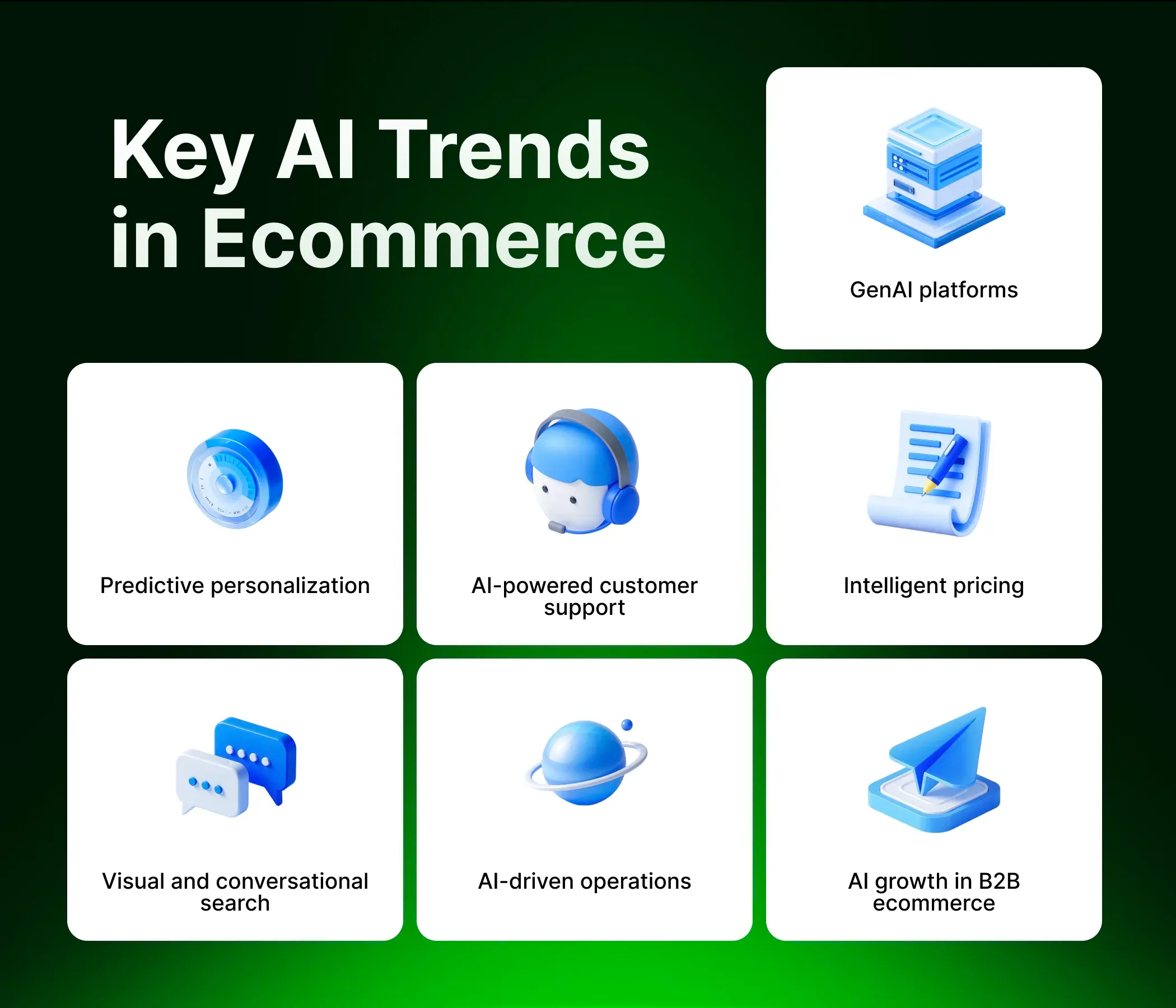
To get straight to the topic, here are those trends:
Click on which one you like the most and read how and why it is important.
How is AI changing ecommerce?
The biggest change for 2026 is probably that AI has moved from being almost an abstract notion to something that shows up in day-to-day work. Those who run online stores have felt it already. It is not just traffic and conversion rates. It is the volume of decisions you have to make every day. Which products to push, what to restock, where margins are slipping, and why support is overloaded. This load mounts up quickly, especially if teams are small. This is why AI for ecommerce is getting practical attention in 2026.
When brands start using AI for ecommerce, they usually begin in the same places. They use it to answer customers faster, improve search and recommendations, and reduce manual operations. They also use it to catch problems earlier, like stockouts or unusual drops in conversion.
You're not automating for the sake of it. You're doing it to keep things running smoothly as the store grows and gets harder to manage.
Key AI trends shaping ecommerce
You do not need 20 AI initiatives to see impact, two or three that match how your store makes money will do. The trends below are practical and ready to test.
Trend #1. GenAI platforms are a new commerce channel
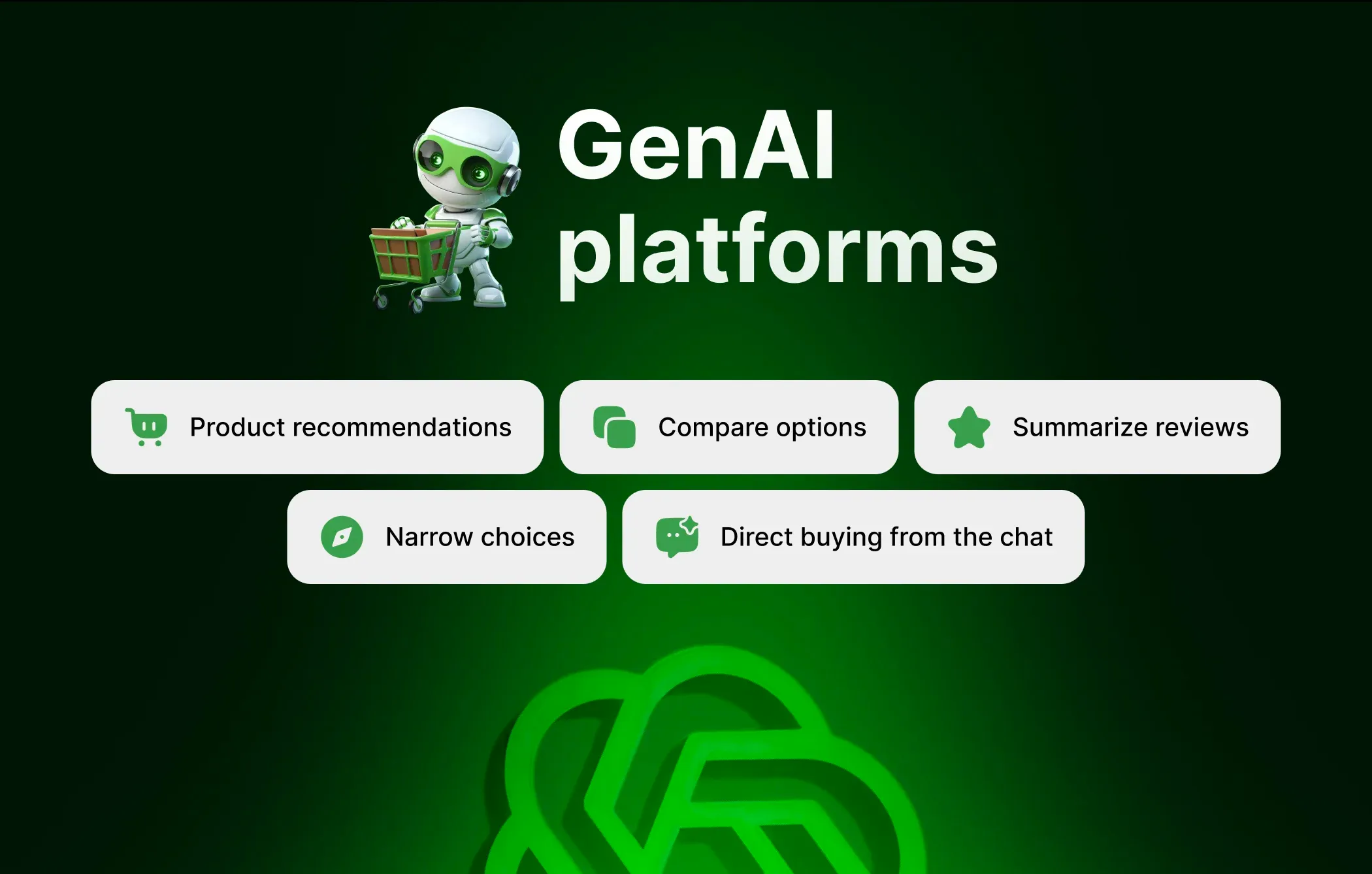
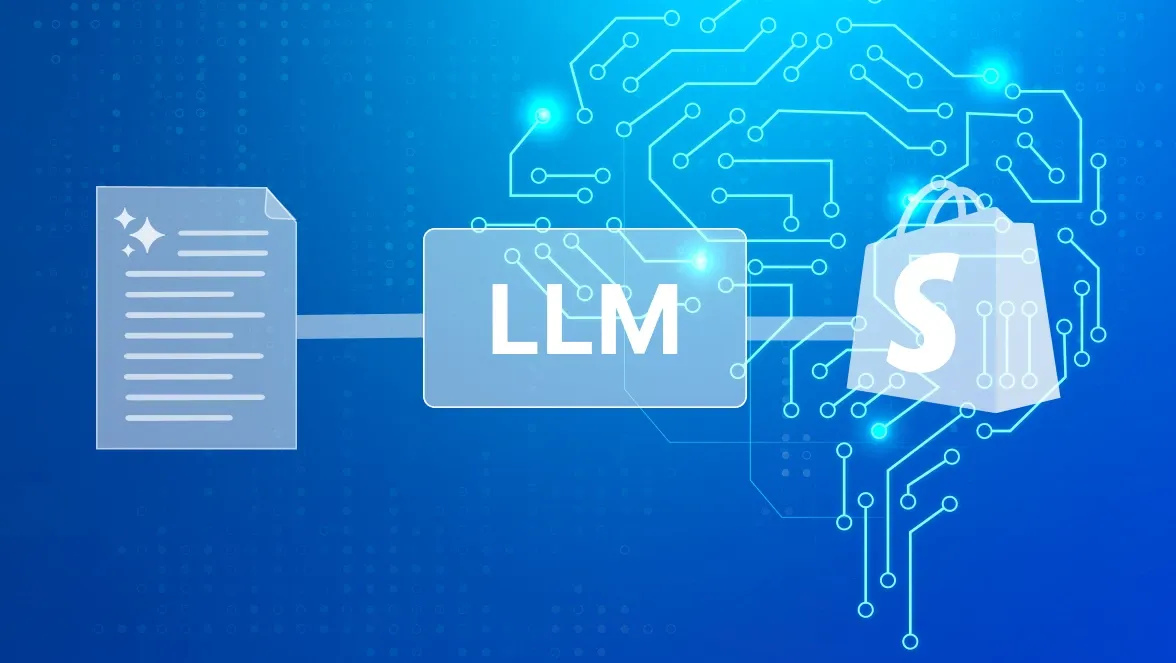
In 2026, shoppers won't start every purchase on your website or in Google. More of them will start inside GenAI tools like OpenAI or Gemini that feel like a personal buyer. That includes assistants in chat interfaces and AI-first discovery surfaces. This is a big change for the future of AI in ecommerce, because discovery moves upstream. Apart from recommending products, these platforms compare options, summarize reviews, and narrow choices. Some even support direct buying inside the chat experience.
That shifts artificial intelligence in ecommerce from "supporting the store" to "being the storefront entrance." For brands, this becomes a new version of SEO. You are now optimizing for answers, not just rankings. Product data needs to be machine-readable and consistent. Your policies, shipping, and returns must be easy to interpret. It is a part of how AI is changing ecommerce at the channel level. You can already see the pattern in the market.
OpenAI introduced shopping research and the OpenAI Operator, and it also launched direct buying in ChatGPT for some merchants. Google announced buy buttons inside Gemini and AI search experiences. Your product page is no longer the first impression. The first impression is how your brand appears in AI-generated guidance.
Pro tip: where to start
Start with your product data. Clean titles, attributes, pricing, and availability signals first.
Add clear shipping times, returns rules, and warranty details.
Make FAQs structured and easy for systems to parse.
Then test how assistants describe your products and competitors.
Track gaps. Do it in messaging, missing specs, and incorrect assumptions.
Trend #2. Predictive personalization across the customer journey
Personalization has developed beyond established norms. In 2026, AI for ecommerce personalization predicts what customers need next. It analyzes intent across sessions, devices, and channels. This allows brands to respond before customers ask. Artificial intelligence in ecommerce powers real-time journey adjustments. Simultaneously, product recommendations, banners, and emails adapt instantly. Content becomes interesting even without manual segmentation. This boosts engagement without increasing workload. Many companies already rely on predictive personalization. Leading brands report higher conversion stability and repeat purchases.
Pro tip: where to start
Start with one moment in the journey, not the whole funnel.
Pick either homepage recommendations or post-purchase email (they are easier to track).
Make sure your product data is clean first, especially categories, variants, and availability.
Connect only three signals: browsing history, purchase history, and stock status.
Track conversion rate, average order value, repeat purchase rate, and unsubscribe rate together.
Trend #3. AI-powered customer support
Customer support is one of the fastest-growing areas of AI in ecommerce. Despite technological advancements, there are always customers who expect instant answers and clear next steps. AI-driven systems now resolve complex issues, not just FAQs. They understand intent, order context, and sentiment, and as a result, resolution time is significantly reduced! Today’s AI support goes beyond scripted replies. It can:
Read customers’ messages and infer what they actually need
Pull order details, shipping status, and return rules in one flow
Summarize long threads and suggest the best resolution path Companies often use AI as a front line and a co-pilot. Simple requests can be solved end-to-end in minutes. However, more complex cases get handed to an agent with context already prepared. That includes the customer's history, relevant policies, and suggested next actions. AI can proactively flag delivery risks and highlight updates before customers complain.
Pro tip: where to start
Start with your top three ticket categories by volume. Order status, returns, and delivery changes are usually the fastest wins.
Connect AI to your helpdesk and order system so it can use real data.
Set clear rules for refunds, replacements, and exceptions.
Review transcripts weekly and update policies and product pages based on recurring issues.
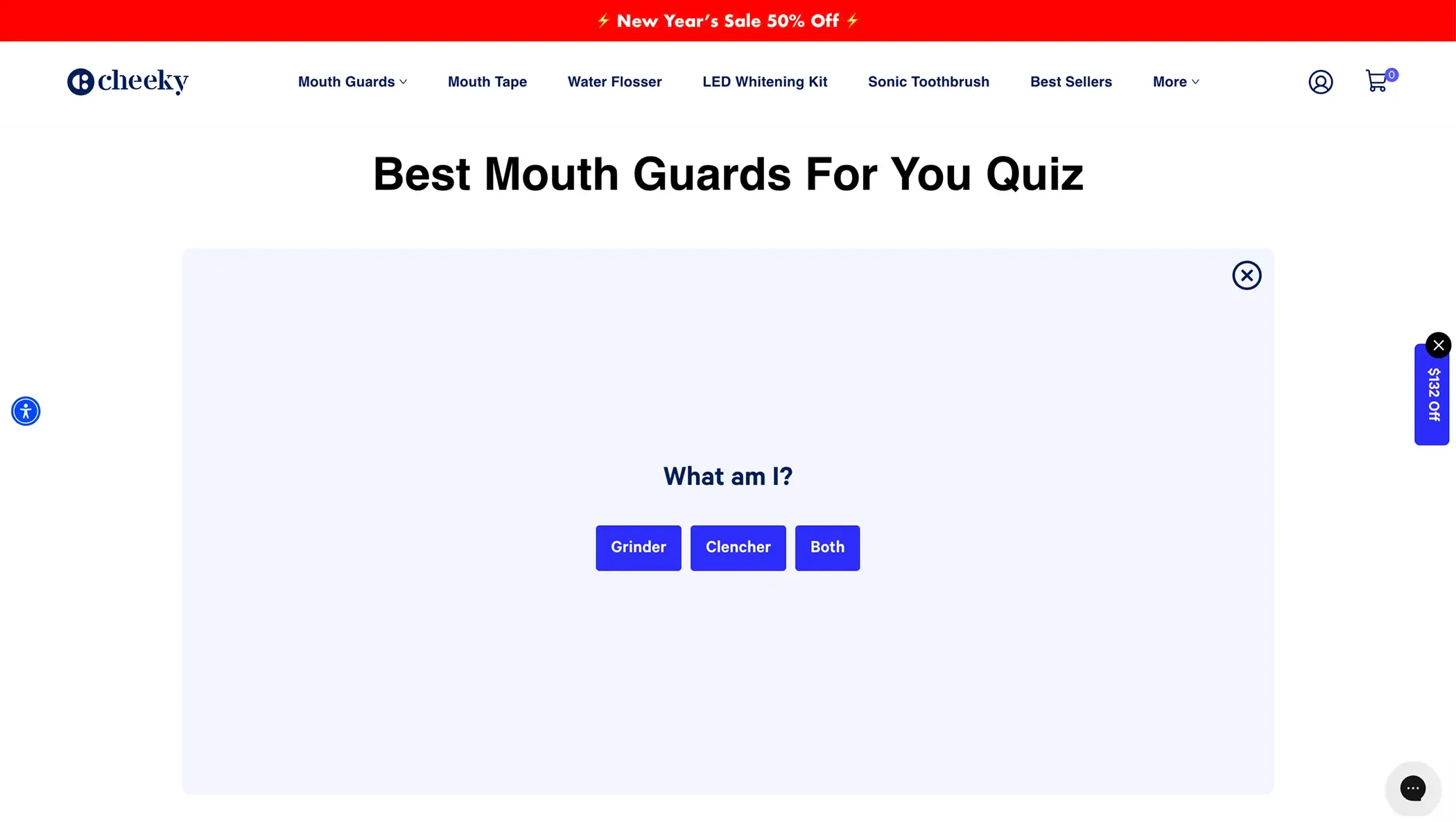
One of our clients, Cheeky, uses on-site AI to interpret customer requests and automatically find what they need. More details we've covered in the case study.
Trend #4. Intelligent pricing and demand forecasting
Pricing is no longer something you set once and revisit next month. Markets shift, competitors know how to accommodate, and customer demand changes weekly. You can see the benefits of using artificial intelligence in ecommerce right away, particularly in pricing, which is why it is expected to take off in 2026. It helps teams spot patterns that are easy to miss in spreadsheets. It also reduces the lag between what is happening and how your store responds. This makes pricing feel controlled, not chaotic.
With AI, pricing models read multiple signals at once:
They track demand changes, competitor moves, seasonality, and channel performance.
They factor in stock levels, lead times, and projected replenishment dates.
Instead of "set it and forget it," prices can adjust within your parameters (minimum margin or brand protection limits). This keeps decisions aligned with strategy, not just short-term conversion. Demand forecasting is the other half of the equation. When you predict demand more accurately, you discount with purpose. You also avoid panic markdowns. That's why pricing and forecasting are often combined in AI. You can see where demand is growing, where it is softening, and what inventory risk looks like. It also makes performance easier to predict, which matters for planning and money flow.
Pro tip: where to start
Pick one category with enough volume and constant purchases.
Set strict rules for minimum margin and maximum discount.
Start with forecasting insights before going to automatic price changes.
Run A/B tests on pricing logic where possible.
Track margin, sell-through, return rate, and conversion together.
Trend #5. Visual and conversational search
Search has become a make-or-break moment for ecommerce. People are not browsing as they used to, and they are less patient. They type messy queries, use slang, and change their minds right during the search. On mobile, they often do not want to scroll through ten pages to find one item. In 2026, these factors illustrate how AI is changing ecommerce. The smart search helps customers get to "this is the right product" with less effort.
The biggest shift is how customers start discovery. Shoppers no longer type precise keywords. They upload a screenshot, take a photo, or ask a question by voice. With image-based search, a customer can say, “I want shoes like this,” and get close matches.
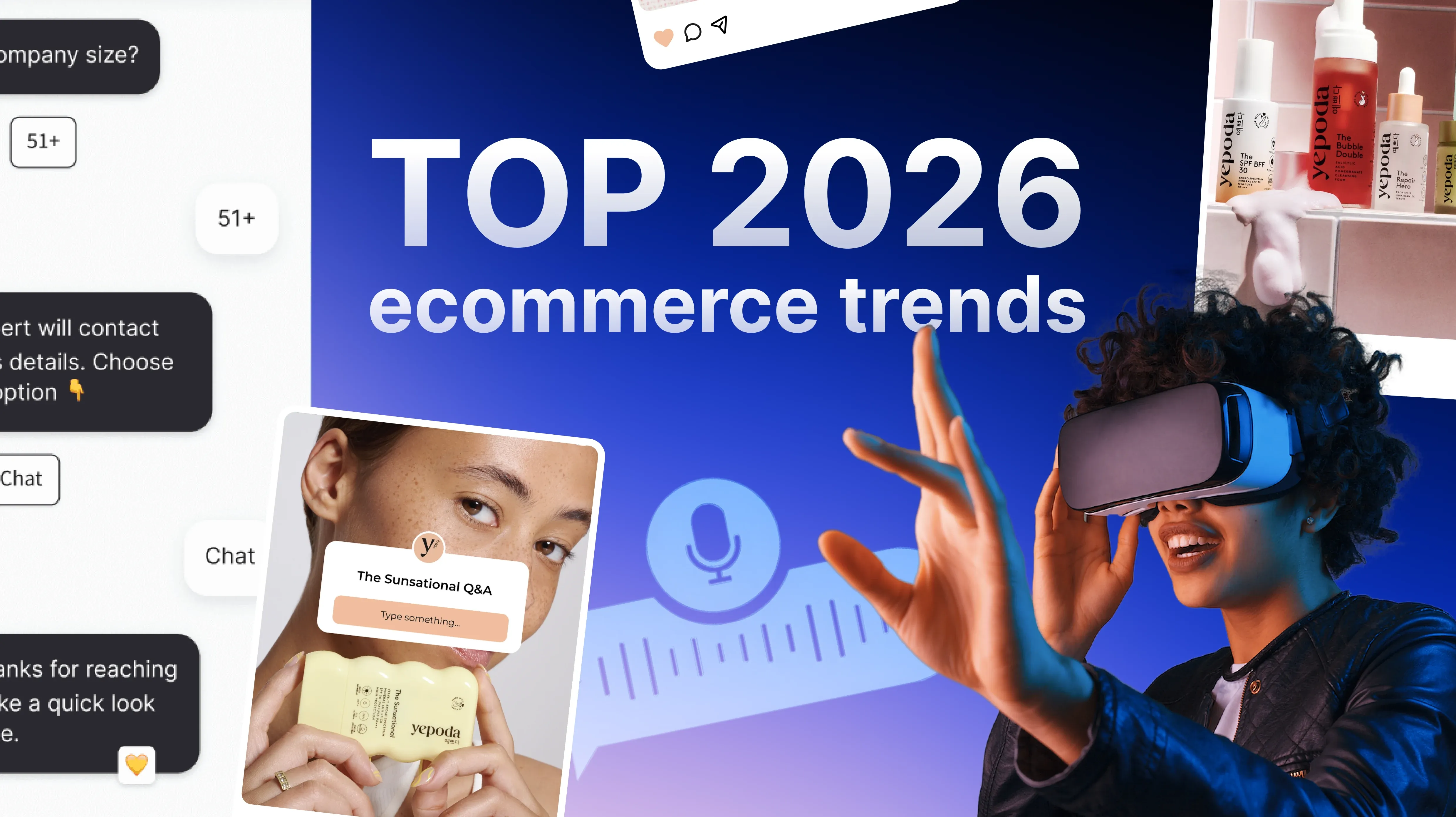
Visual search is especially useful for style-led categories. Fashion and apparel, home decor, beauty, and jewelry benefit the most. We can share a clear example of AI use cases in ecommerce. Yepoda, a Korean beauty brand and our client, we integrated a custom skin analyzer for their store through our AI integration services.

Customers often know the look they want, but not the product name. AI can interpret shapes, colors, and patterns, then surface similar items. That shortens time-to-product and prevents early drop-offs.
Conversational lookup matters for a different reason. It turns search into a guided experience. Instead of forcing customers to refine keywords over and over, AI can ask follow-up questions. When customers understand what they are buying, conversion improves, and returns often drop. If you want conversational search to feel truly natural, you need more than a search box. This is where AI chatbot development services fit well. A well-built chatbot can sit on top of search and merchandising logic. It can guide discovery, answer product questions, and hand off to support when needed.
Voice and audio search are also becoming part of discovery. Many shoppers now speak their searches, especially on mobile. To support that behavior, brands added speech-to-text capabilities in 2026. An OpenAI Whisper integration services approach can convert voice into clean text. Then the store can route that text into search, support, or product guidance. This helps customers shop the way they communicate in real life.
Pro tip: where to start
Start by cleaning product data and attributes, because AI search is only as good as your catalog.
Fix titles, variant labels, and key specs customers actually care about.
Improve "no results" handling and synonyms for common search terms.
Pilot conversational search on a small set of categories with clear intent patterns.
Add visual search for the categories where look and style drive decisions.
Track search-to-product-view rate, search exits, and conversion from search sessions.
Trend #6. AI-driven operations, inventory, and fulfillment
Operations get harder as soon as a store starts growing and income increases. More SKUs, more suppliers, more warehouses, and more sales channels. Even simple decisions start to ripple across the whole business.
A small forecasting mistake becomes a stockout, then a support spike, then lost repeat buyers. This is why AI becomes a serious operational tool in 2026. It helps teams stay ahead of problems rather than clean them up later.
The biggest value is planning accuracy. AI can forecast demand using more signals than most teams can realistically track. It looks at seasonality, promotions, lead times, and channel trends. It can also factor in product relationships, like items that tend to sell together. From there, it helps with inventory placement, not just inventory volume. That means sending stock where demand is likely to show up, not where it used to be.
Ecommerce is using AI to act like an early-warning layer. They can identify supply issues when a supplier's delivery times start to drop. They can spot abnormal return rates that signal a product issue. This gives teams time to adjust before customers feel the impact. It also improves coordination across marketing, operations, and finance.
Pro tip: where to start
Start with forecasting, not automation.
Pick one category that has steady volume and clear seasonality.
Compare AI forecasts against your planning for 8 to 12 weeks.
Track accuracy, stockout rate, and excess inventory together.
Then use the forecasts to guide reorder points before changing workflows.
Once the numbers look reliable, implement automation in small steps. For example, automate alerts and recommendations before auto-reordering.
Trend #7. AI growth in B2B ecommerce
B2B ecommerce is entering its own AI acceleration phase. For years, most AI trends in ecommerce focused on B2C. That is changing quickly as B2B buyers adopt digital-first behavior. In 2026, AI becomes a core enabler for B2B sales models.
AI supports complex pricing, contract logic, and account-based journeys. It helps teams manage large catalogs without slowing down operations. This answers a growing demand for efficiency on both sides of the transaction.
One major driver is buyer expectation. B2B customers research independently before contacting sales. They want relevant recommendations, instant answers, and clear comparisons.
Pro tip: where to start
Start with order history and account-level data.
Use AI to recommend reorders or complementary products.
Avoid rebuilding pricing logic at first.
Focus on insights that support sales teams and buyers simultaneously.
Conclusion
By 2026, we'll have already passed the adoption-only level, and the key question will be how brands employ AI for ecommerce, not whether they do so at all. Artificial intelligence is not a nice additional tool, it influences decisions at the strategic level. It impacts how fast teams react and how confident those decisions feel.
What stands out in those AI trends is not automation itself, but alignment. The strongest results come when AI supports how a business already operates and grows.
Across all of this, AI tools are helping ecommerce teams protect performance as complexity develops. That matters more in 2026 than raw experimentation ever did. Looking ahead, the advantage will not come from chasing every new capability. It will come from choosing the key AI trends shaping ecommerce that fit your model and customers.
In 2026, that difference separates brands that scale with control from those that scale with stress. If you’re planning to implement AI features and want expert guidance, contact us. We specialize in ecommerce development and have some practical experience working with AI solutions. Let's discuss the right approach for your business.
Frequently asked questions
What shall I start with if I want to implement AI in ecommerce?
Start with the problem that costs you the most time or money today. For many teams, that is support, poor discovery, search, or pricing. Avoid starting with tools that require heavy data restructuring or long rollout cycles. If you don't know where to start, get in touch with our team.
Can smaller ecommerce stores benefit from AI?
Yes. Many tools are plug-in and affordable. Smaller teams often can see impact faster.
How is AI changing decision-making in 2026?
It surfaces issues earlier and speeds up routine decisions. Teams spend less time guessing.
How do we measure if AI is working?
Pick a couple of numbers that actually matter for that use case (margin, conversion, or time to resolve tickets). Then compare the results to what you were getting before.
Can AI replace people in ecommerce?
Usually no. AI tools are helping ecommerce teams to reduce repetitive work and support faster decisions. Humans still own strategy and customer experience.
What should we prioritize among AI trends?
Among the key AI trends shaping ecommerce, choose those that are tied to revenue or operational stability:
Predictive personalization
AI-powered customer support
AI-driven operations and forecasting Avoid "cool" experiments that sound impressive but don't lead to real business results.
How to not overinvest when implementing AI?
Try it in one area, keep it under control, and only expand if it actually shows the results in numbers. Implement it for the whole company later. If you're hesitant about how and where to start, contact us, and we'll help.

Written by
Yurii Zablotskyi
Content Marketing Specialist
Yurii Zablotskyi is a passionate content writer and storyteller with a strong marketing background, focusing on marketing, sales, and technology, turning complex ideas into valuable content.





Was this helpful?
0
No comments yet